Why my Kickstarter predictions were completely wrong
The numbers said the project was going to crush it. The live campaign said otherwise.
This article is about the marketing of my recent Kickstarter campaign for Stamp Showdown. Based on all numbers, this should’ve been a super successful campaign. But it wasn’t.
I have found out why and I will outline the reason in a completely transparent manner. I’ll share all my ad spend, newsletter subscribers and more. You can use it as a guide to predicting your campaign’s success and how to not mess up like I did.
The marketing funnel: ads → subscribers → backers
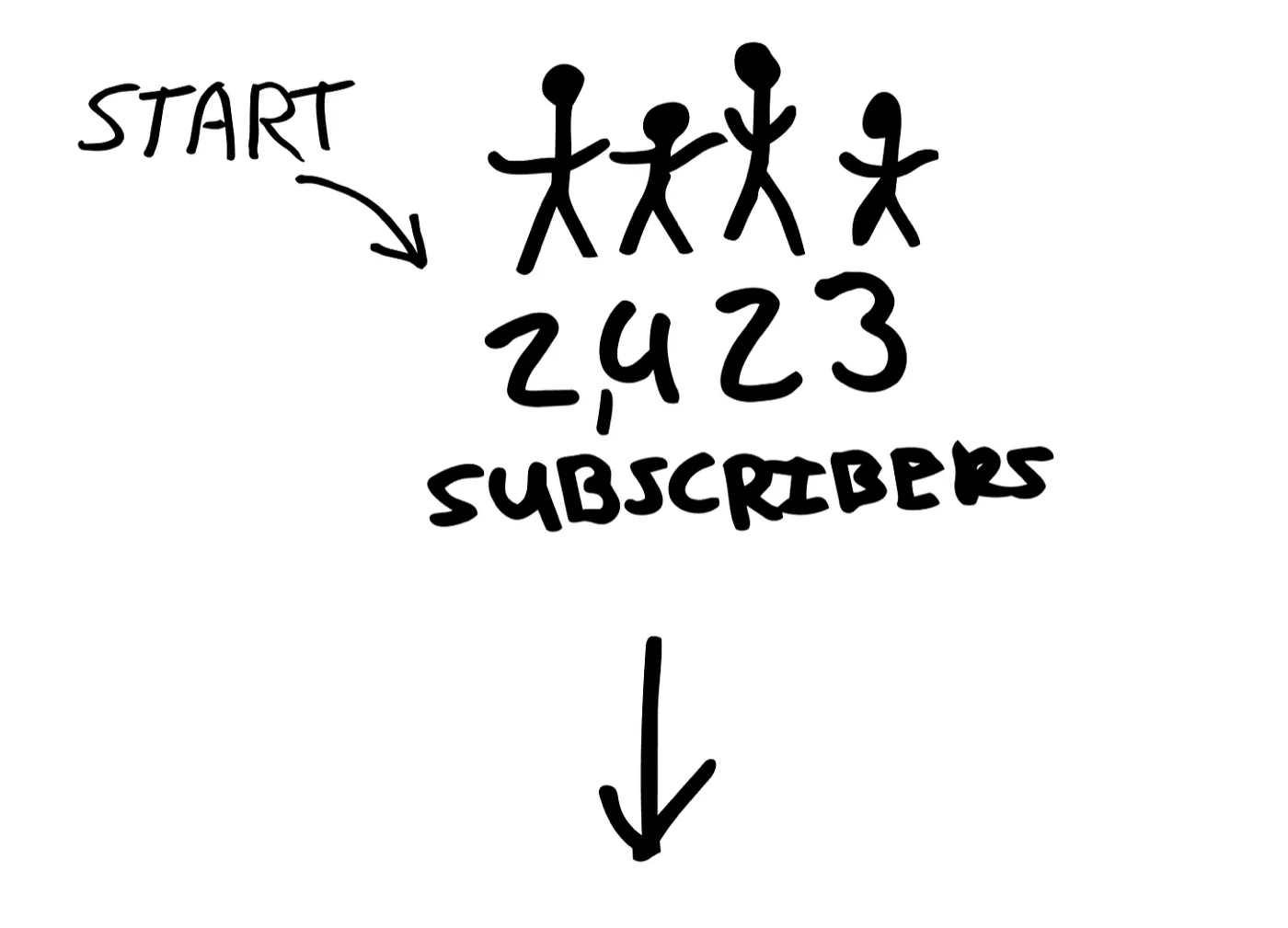
I started with 2,423 subscribers to my newsletter.
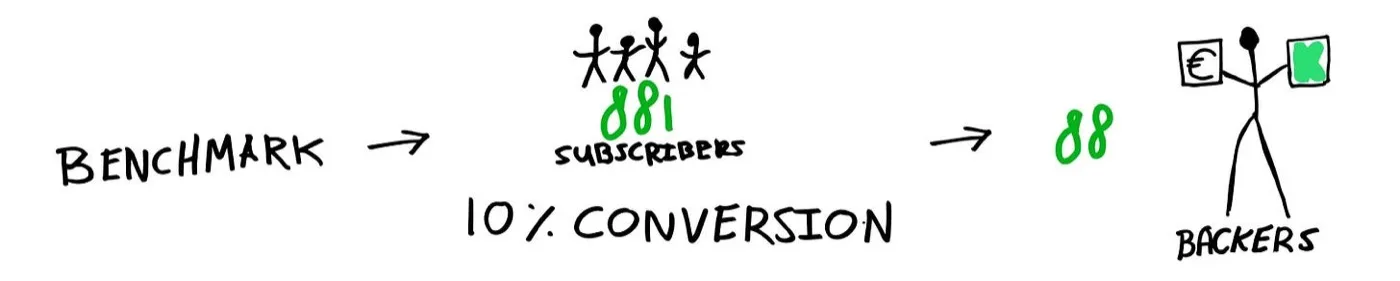
I ran ads on Meta, spend €1,800 to get 881 additional subscribers.
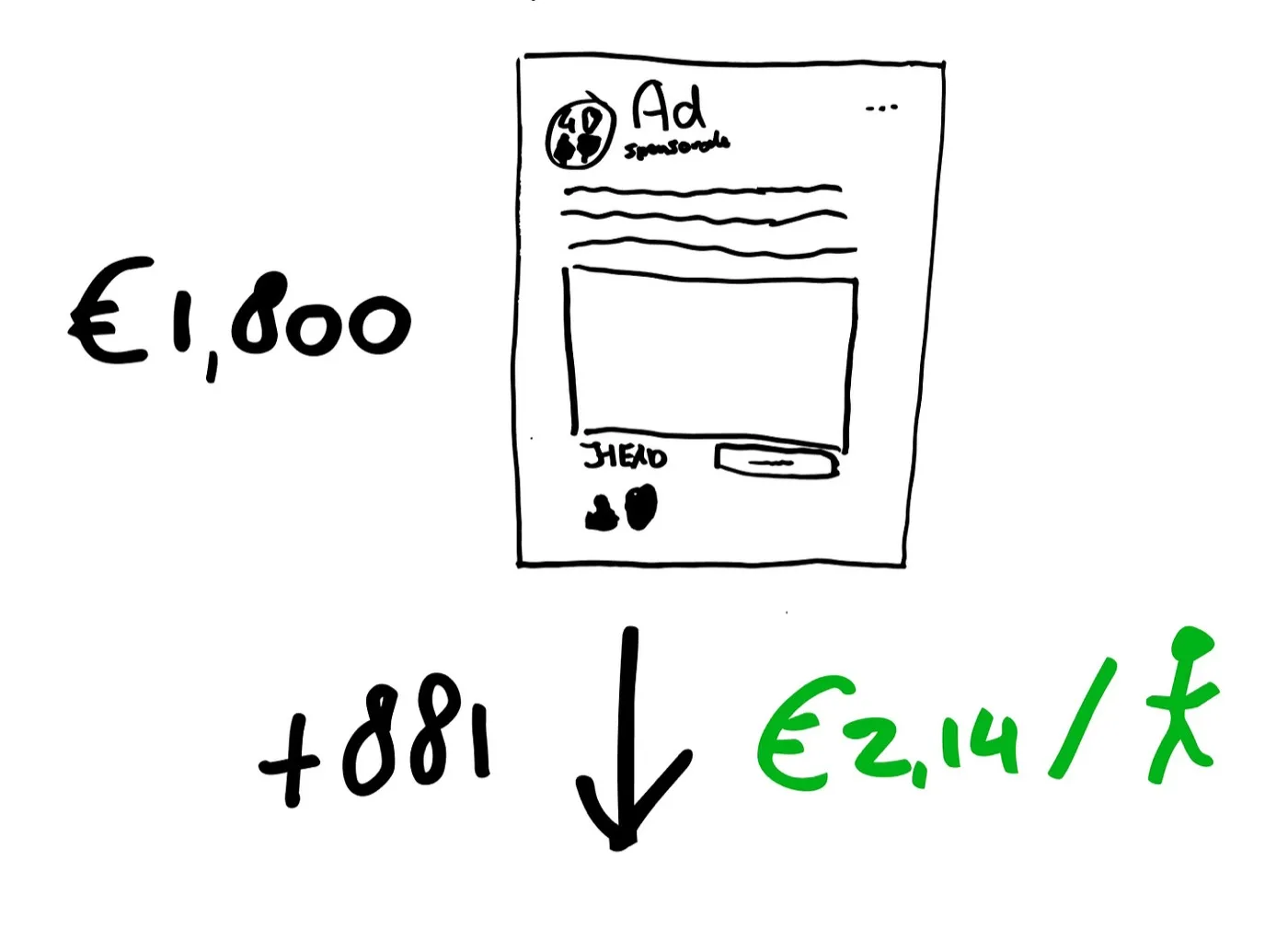
The costs were €2.14 per subscriber, which is great. A cost per lead (a subscriber is a lead) €2.50 per subscriber is already considered good.
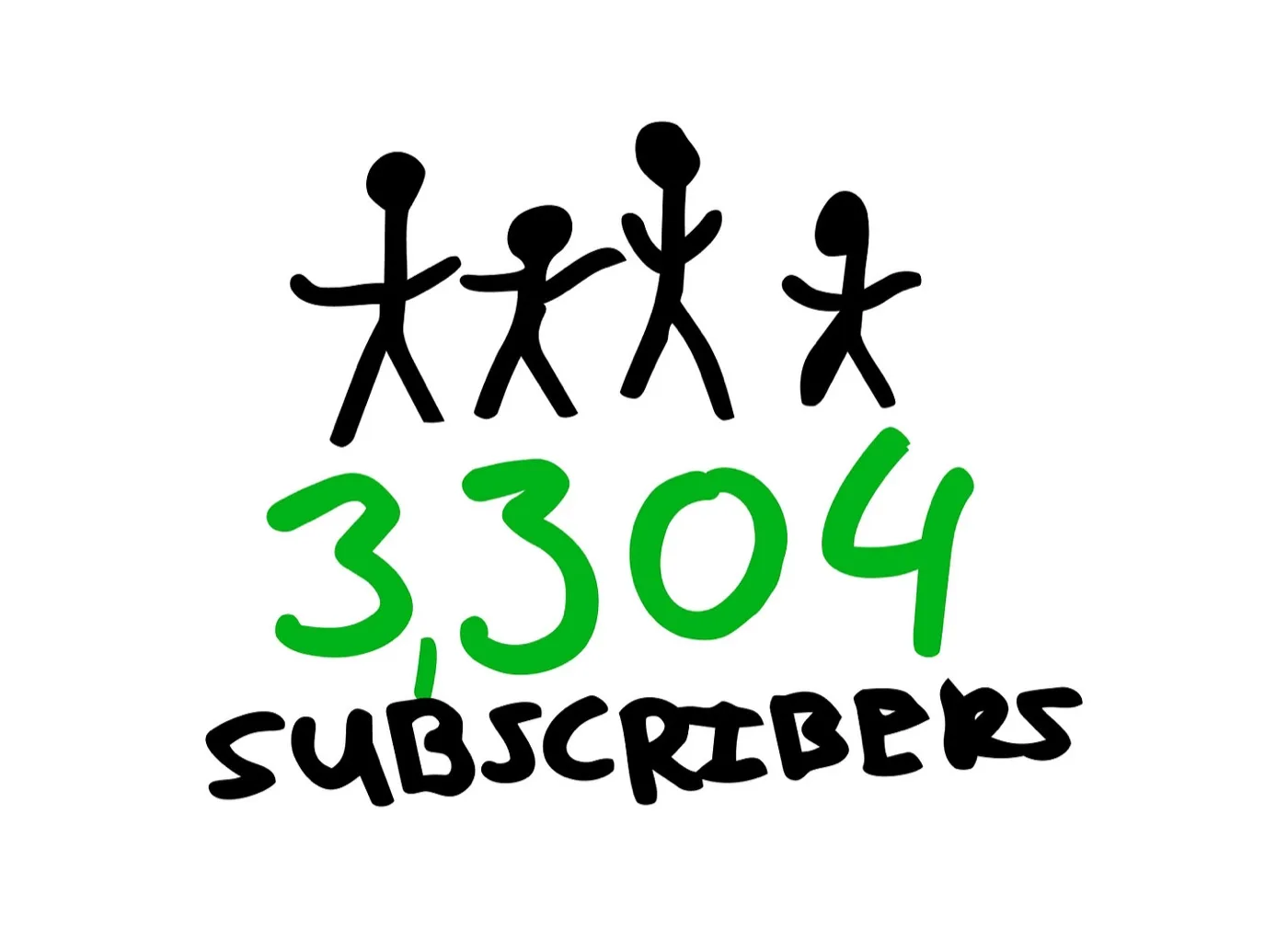
So far so good. Now I had 3,304 subscribers before the campaign launched.
The generally accepted benchmark of the conversion of subscribers to backers for a project in the board and card game category is around 10%.
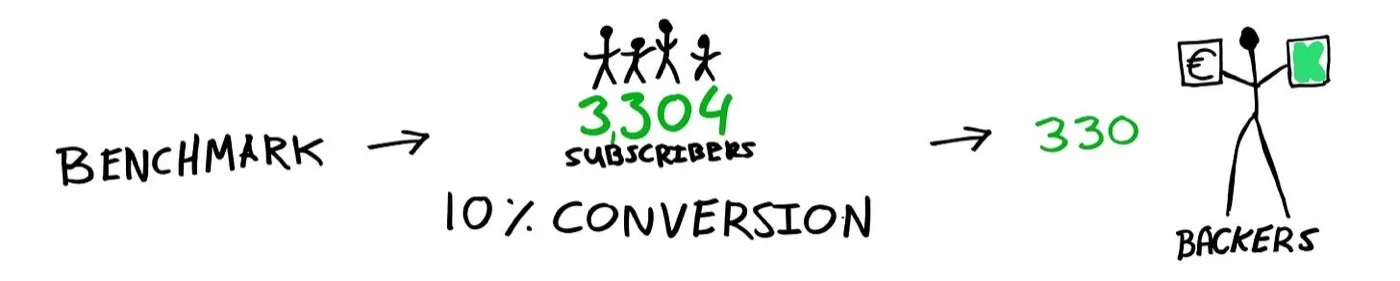
This would mean around 330 of my subscribers would be interested enough in the game to actually back the game on Kickstarter. And of the people who subscribed specifically out of interest for Stamp Showdown, I’d expect 88 backers.
My earlier campaign for River Rats saw an even higher conversion rate: 20%.
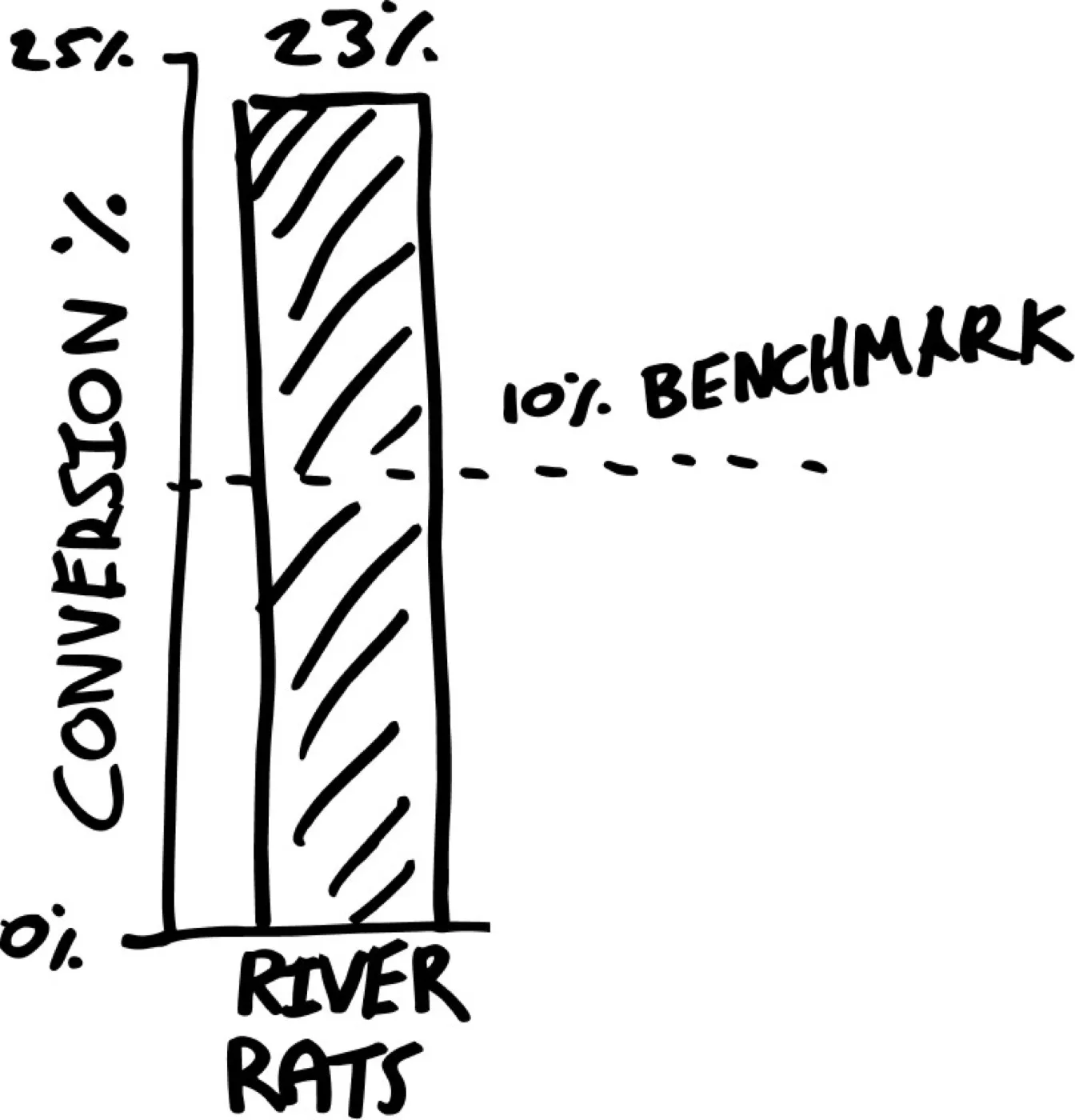
And for people who subscribed based on the Meta ad for River Rats was with 23% even higher. And the Return On Ads (ROA) was 3.1 (this is great). So I was optimistic for Stamp Showdown…
What do you think the real conversion rate for new subscribers was?
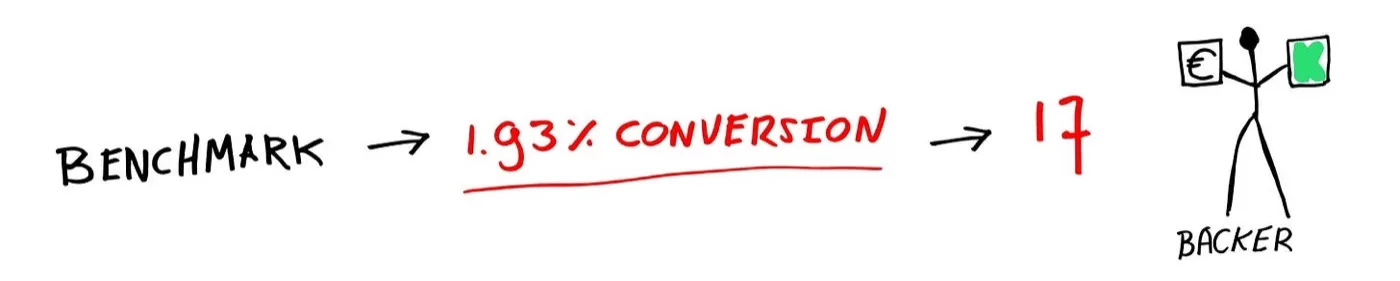
1.93%!! With an ROA of only 0.21. This is five times lower than the good average.
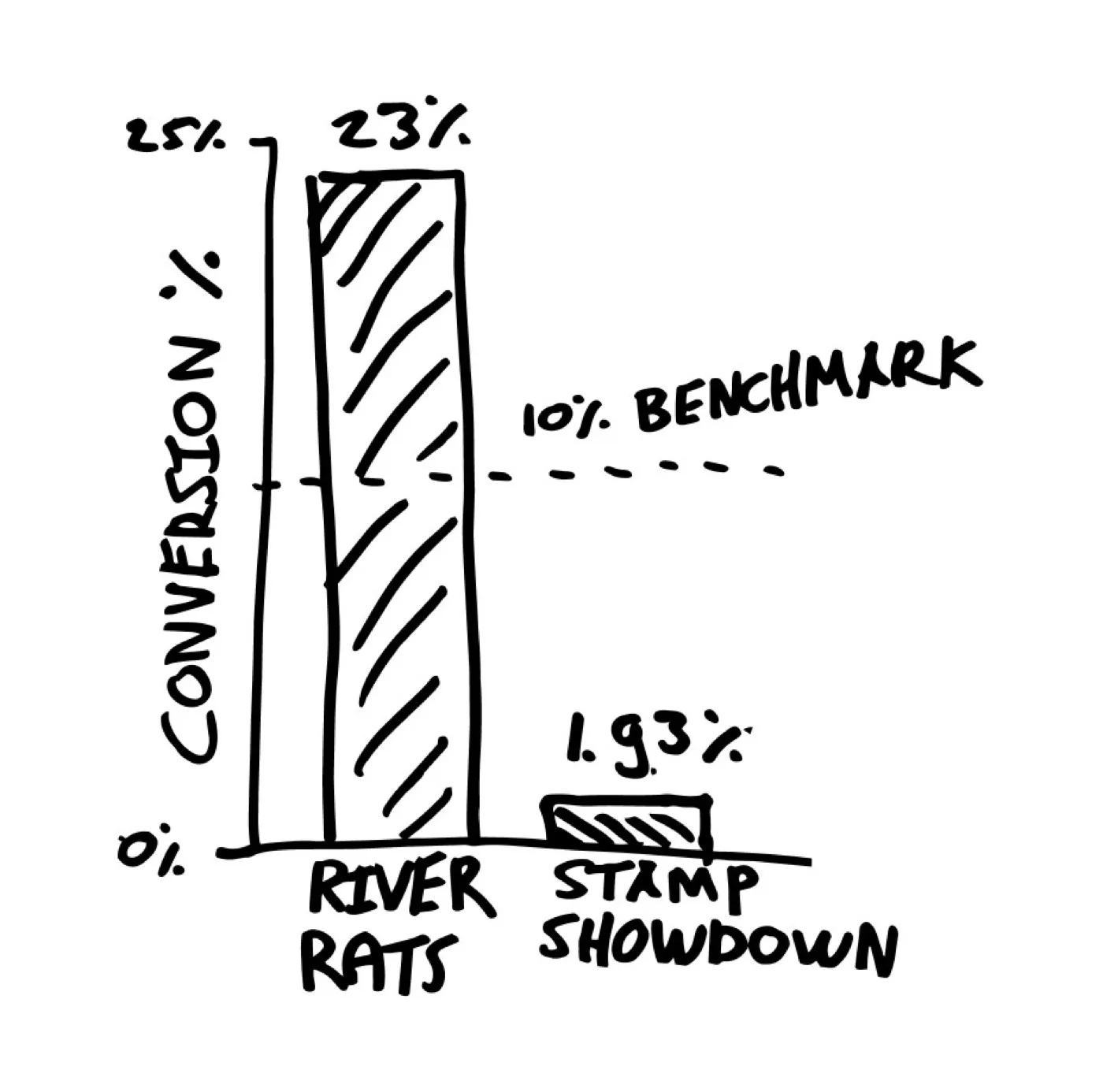
For a couple of days, I was puzzled and didn’t understand why.
Then I thought about my messaging in the ad campaign. When you see my most successful ad in terms of lead conversion, what do you think?
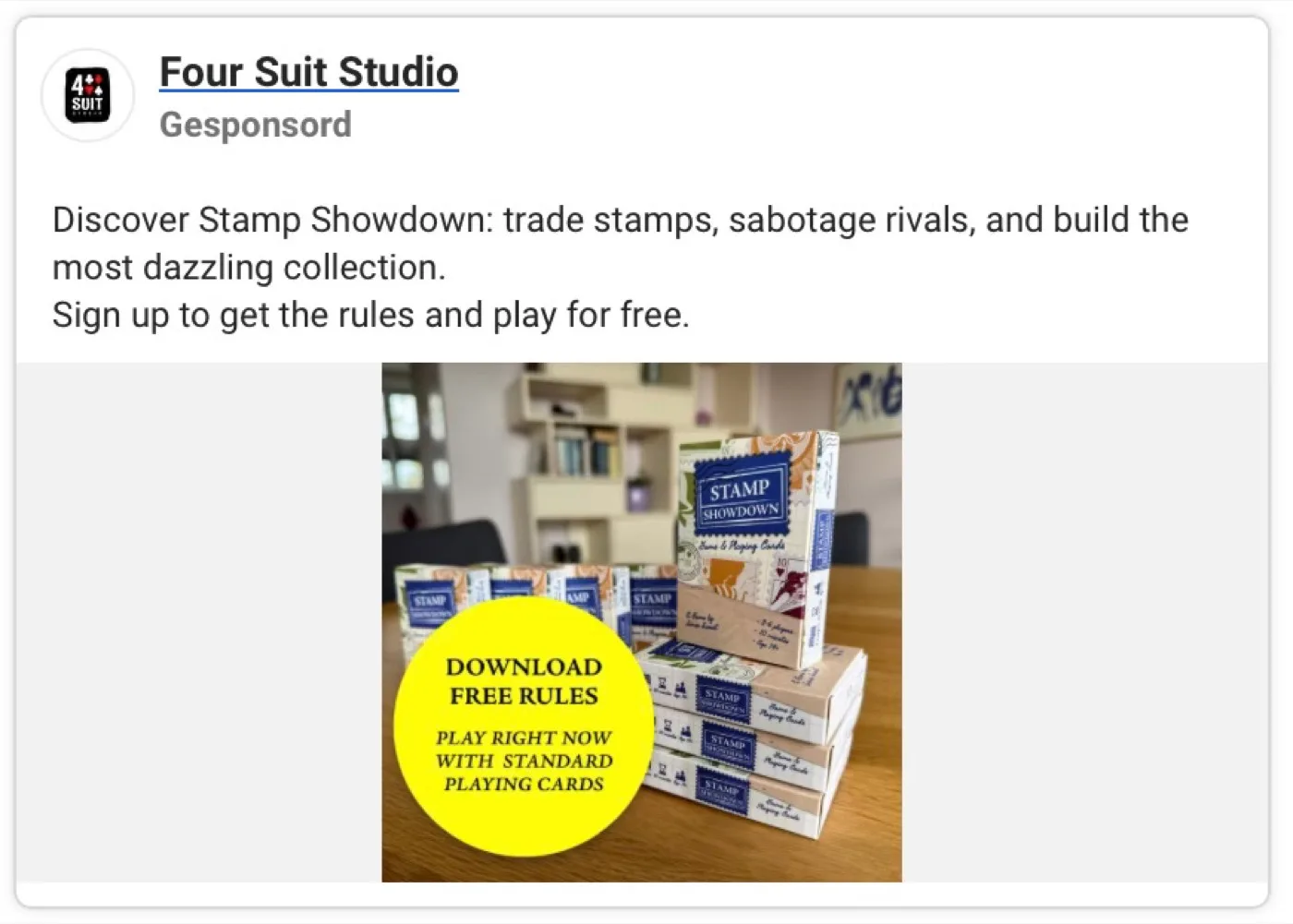
I believed that letting people download the rules to play the game with a standard deck of cards right away would build excitement; if they enjoy the experience, they’d be likely to support the Kickstarter for the thematic edition or the deluxe version with a game board. At least, that was my theory.
The "Free to Play" ad vs. the "Back us on Kickstarter" intent
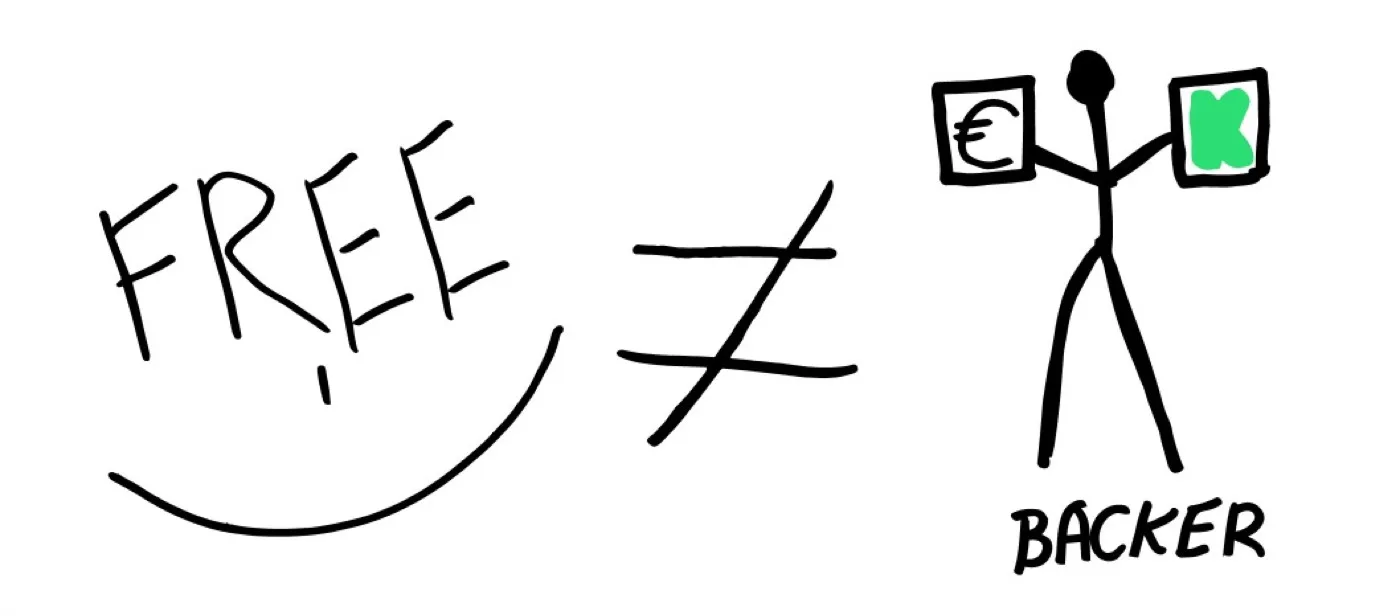
In hindsight, I think people really wanted to check out the game and play it for free with a standard deck of playing cards (which is awesome!). This is why the ads converted really well into subscribers.
But I was not reaching the people who were keen to back the game on Kickstarter. Kickstarter is still a niche platform as is its audience. I might have even devalued the game in my messaging.
I felt a bit silly that I did not catch this earlier. I wasn’t building a list of potential customers, I was building a list of people who love to try out new games, for free.
Giveaway experiment
At the Netherlands' largest board game convention, I gave away 250 copies of a special 'Promo Edition' of Stamp Showdown. By offering this 32-card limited version to new newsletter subscribers, I was able to put the core gameplay directly into the hands of 250 enthusiasts. The goal was to get people playing and talking about the game before the Kickstarter launches. With the potential benefit that they’d play with their friends and family and bring in new enthusiasts to the Kickstarter project.
Inspiration
The inspiration to try this out game from the OP Games, publisher of the famous game Flip 7. They did something similar on a much larger scale. They gave away 100,000(!) copies.
This helped them to get the game on a lot of people’s tables and helped the sell 2 million copies!
The results of the giveaway
So how did it go for me?
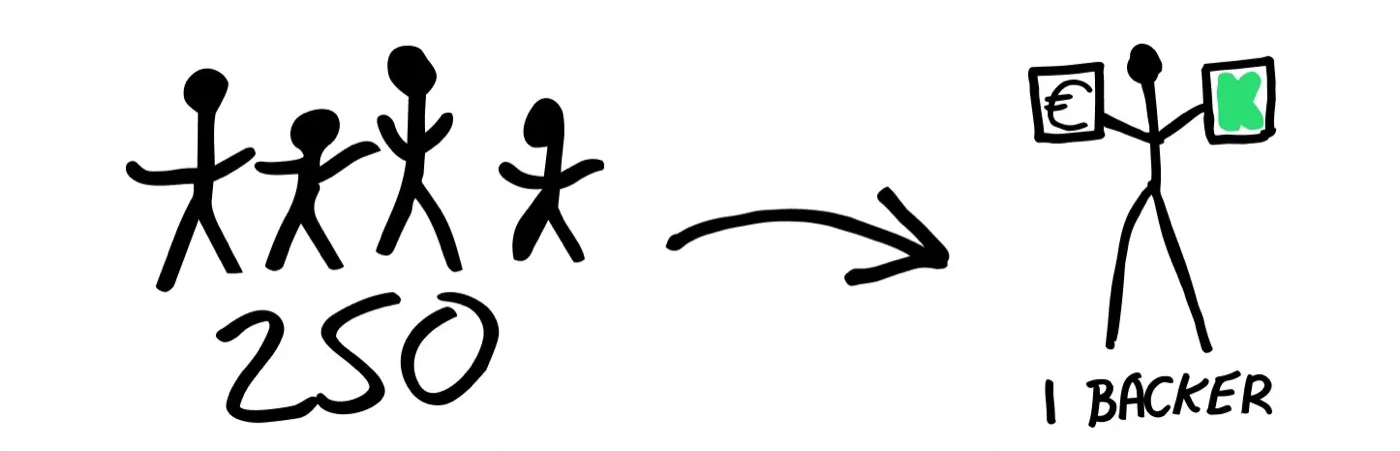
Of the 240 people who signed up for our promo version, only 1 person decided to back the project (thank you!!).
Takeaway: Perhaps giving away the game you’re crowdfunding for isn’t the best strategy. It is better suited for mass market retail.
There is a big difference between retail and crowdfunding:
The OP Games used the Flip 7 giveaway to create velocity for a product already in stock.
I used freebies to create funding for a product that doesn’t exist yet.
Still a successful campaign
The Stamp Showdown campaign was still successful. With the support of 250 backers, we can now bring the game to life. And with the partnership with the awesome publisher Gigamic, who will publish the game for retail. I am sure the version that will hit the stores in ‘27 will see many tables in the future.
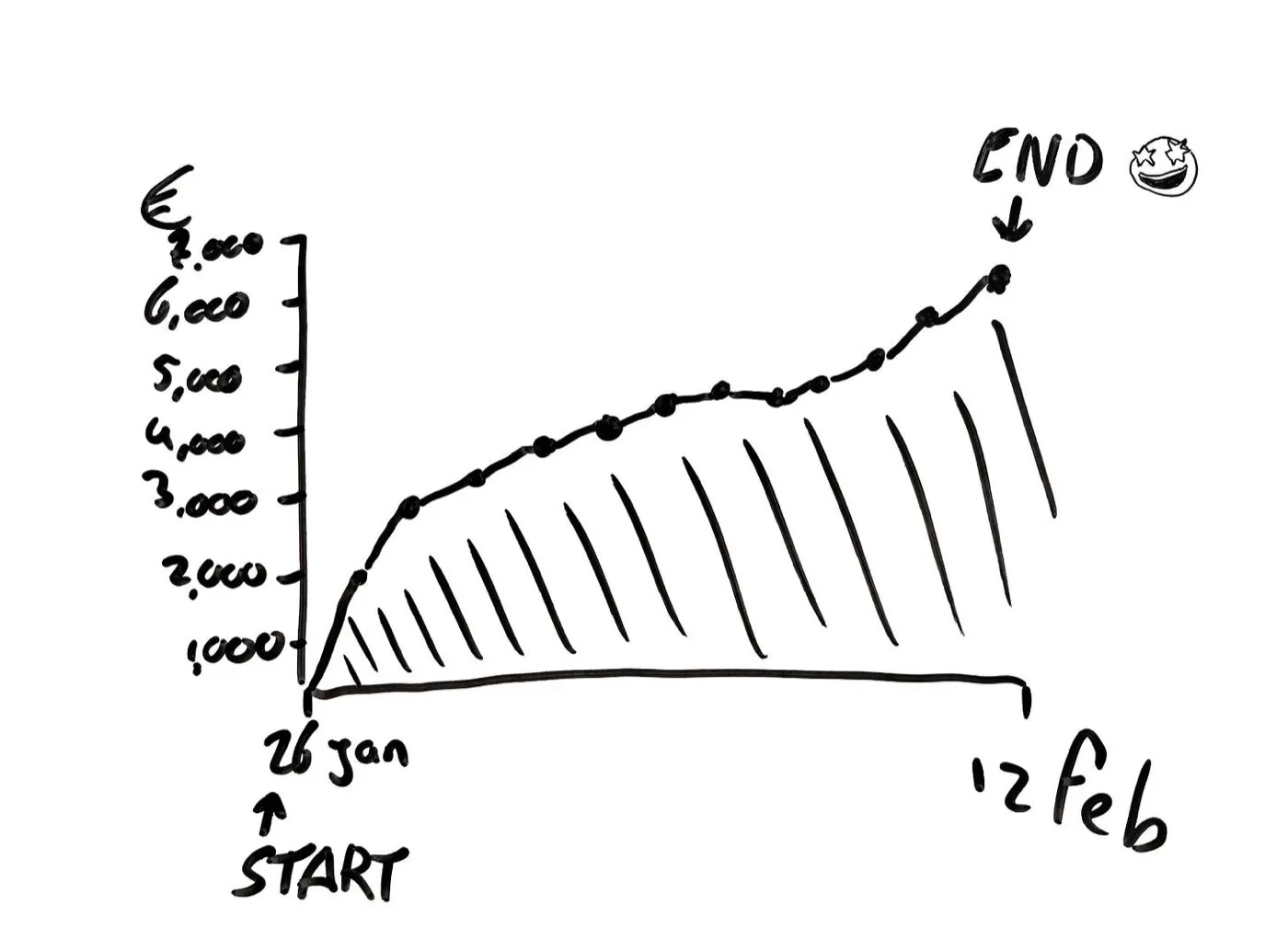
Key lesson: One metric to rule them all
I found the most consistent metric is the number of followers of the Kickstarter project. It is generally accepted that between 20-30% of the followers will back the campaign.
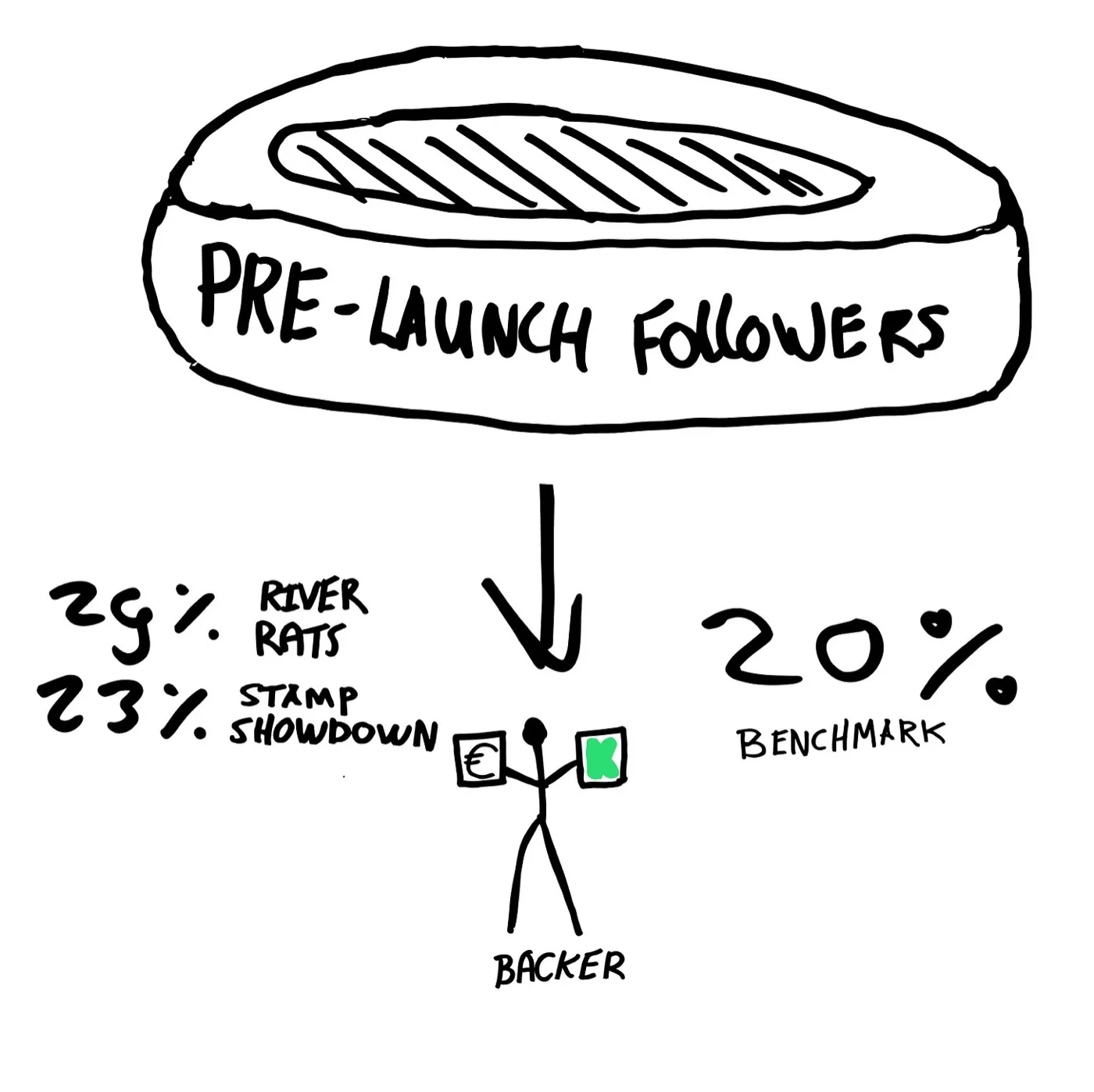
For River Rats this was 29% of the pre-launch followers and Stamp Showdown 23%.
This will be the one metric I will base predictions on in the future.
In future? Does that mean more games are coming? Yes! Stay tuned…
- Robin
Written by Robin Stokkel for Four Suit Studio.