
There's no turn where you get to do all three
The Gallery Gambit design diary, part 2
Last time I wrote about how my girlfriend, who genuinely dislikes board games, designed the foundation of Gallery Gambit. It was all about the satisfaction of collecting aesthetically pleasing sets. (If you missed it, start there.)
This post goes a level deeper into the mechanics and the reasons behind them. For me it’s all about how the game and its mechanics invoke certain feelings. River Rats was build around the feeling of true teamwork, everyone working together to build the best collective poker hand. Gallery Gambit is built around the feeling of puzzling together an aesthetically pleasing set of cards, with just enough conflict to make it fun.
Let me show you how.
The core loop: race, curate, or block
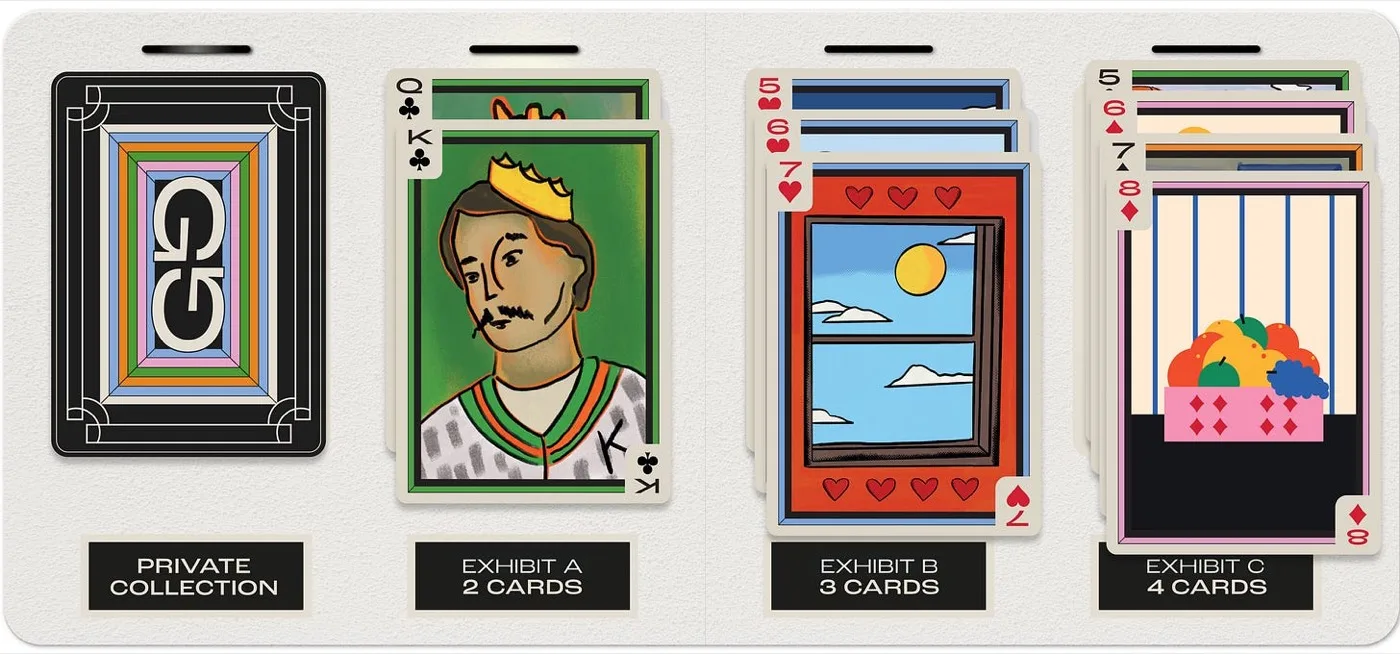
You are each building three small collections of art pieces — Valid Sets, displayed in your Exhibits — from a shared Market of cards.
The heart of the game is a tension between three things you want to do at once. But can’t.
You want to race to finish three Sets of cards, because the round ends the moment one player fills all their Exhibits. You want to curate to build the most valuable, best-looking Sets. The best looking Sets give extra points. And you want to block: mess with your rivals, and make sure they don’t progress.
Those three pull in different directions on every single turn. Spend a turn with a Gambit to curate your collection and someone else might finish first. Rush to finish and your Sets win no bonus points. Interfere with a rival and you have set yourself one step behind.
That’s the core.
The Private Collection: removing the dead turn
In early playtests we hit a recurring problem. Sometimes it’s your turn and there’s just nothing usable in the Market. A dead turn. Frustrating, flat, no fun.
My first fix was a ‘Hail Mary’: blindly draw the top card of the deck. This kind of worked. It removed the frustration. But it did not add anything either. I had hoped for crazy “yes, exactly the one I wanted!” moments, and they almost never came. It took away a bad feeling without adding any fun.
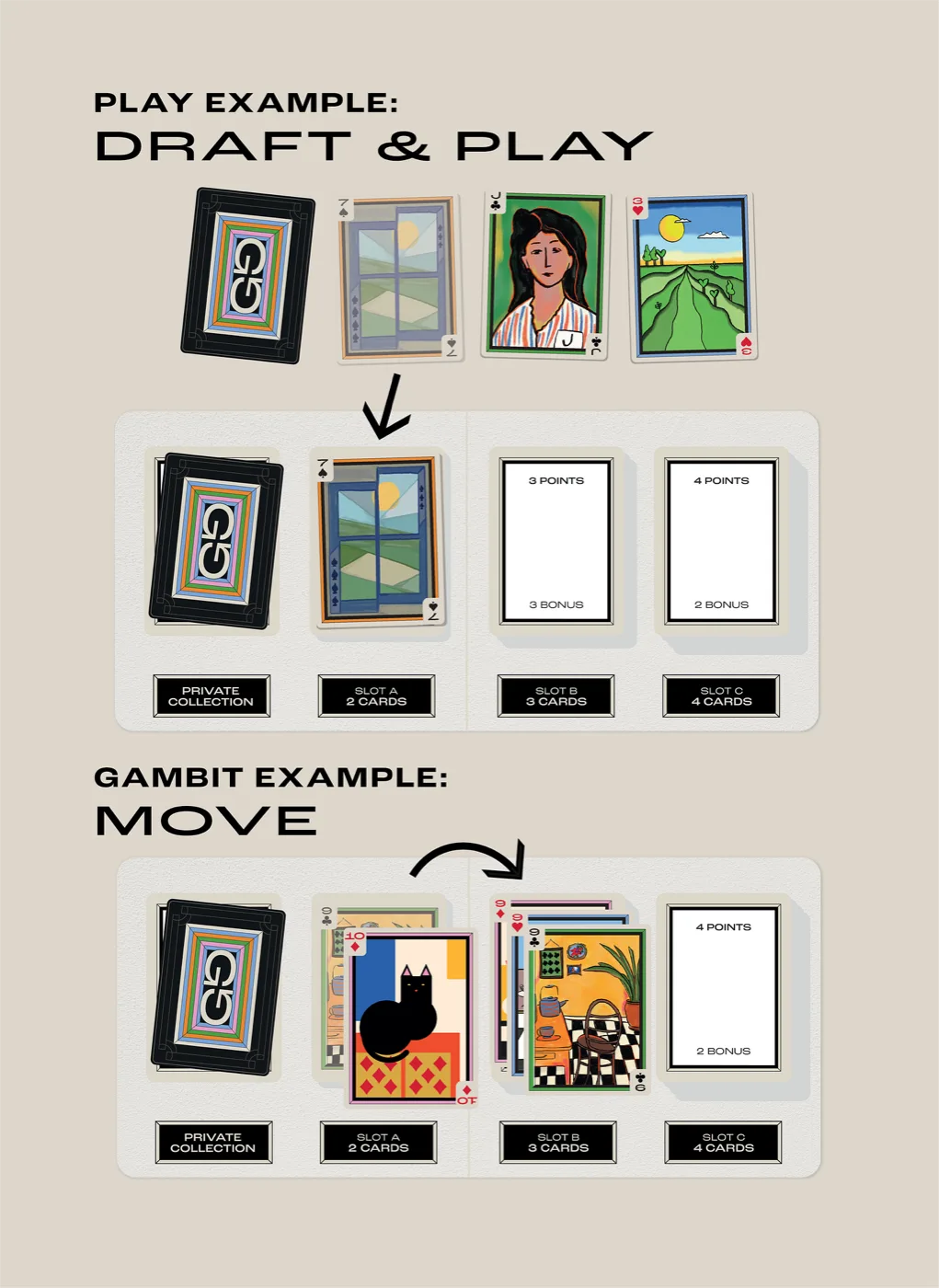
Then a playtester suggested something better: give each player a hidden card they can play when the Market has nothing useful. A one-shot move that’s yours, and a little element of surprise. That became the ‘Private Collection’. It makes turns feel intentional even when the Market is weak. Like you had a card up your sleeve all along. I guess you did…
A little bit of take-that
I’ll be honest about my bias here. I don’t love games where everyone quietly builds their own thing in parallel and barely interacts. Wingspan and Harmonies are beautiful and elegant games, but in my opinion they’re multiplayer solitaires. And that’s not for me.
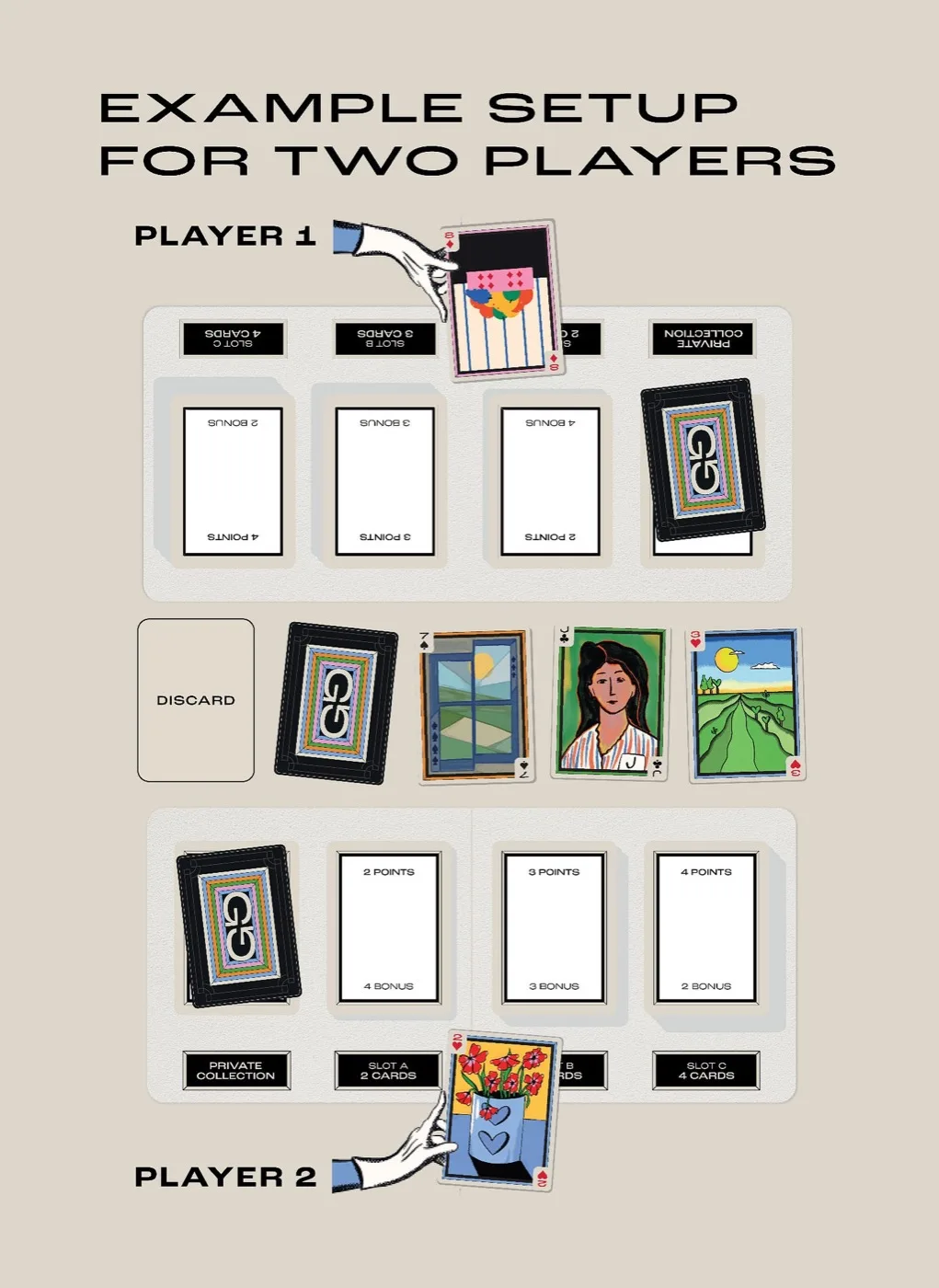
So interaction had to be part of the core, not added as a feature. Right from the start, it was already present by the open information. The Market is shared, and you can see what everyone is collecting. So you can always weigh your own progress against denying someone the card they need.
That was great but, for me, it wasn’t enough. That’s why I added the Sneaky Trade: a Gambit that lets you pick a card from a rival’s unfinished Exhibit and swap it for one of your own. It is the rudest thing in the game, and it exists because I wanted you to look up from your own collection and care about what your rival is doing. It has guardrails, too, so nobody’s whole strategy gets erased in a single move.
Forgeries
What is art without forgeries?
I really like this one because it sharpens the central dilemma: are you racing to finish your Sets or are you making the best Sets?

You can play Jokers, representing forgeries, into your Exhibits. A forgery can stand in for any card, so it completes a Set fast. But a Set containing a forgery can never win the bonus points. Forgeries are always detected, eventually.
A forgery is fast. A real set pays off. Race, or curate: the same tension, in a single card.
How it all fits together
If you want a quick overview of the rules:
You are building three Valid Sets: 2 cards in Exhibit A, 3 in Exhibit B, 4 in Exhibit C. Each ideally stronger than your rivals’ matching Exhibit.
On your turn you Draft & Play from the shared Market, play your Private Collection card (once per round), or pull a Gambit (Move, Swap, or Sneaky Trade).
When one player fills all three Exhibits, everyone else gets a final turn, then you score. The strongest Valid Set in each Exhibit takes the bonus.
Highest total after three Rounds wins.
Don’t take my word for it
I hope you enjoyed this little peek into the kitchen. It’s difficult to describe the tension in this post and it’s much easier to feel while playing.
So here is the good news: Gallery Gambit will be playable online very soon. You will be able to play against your friends, or play solo against bots (still baby-bots. I am training them as we speak). There will be daily challenges too. They can earn you prestige and freebies!
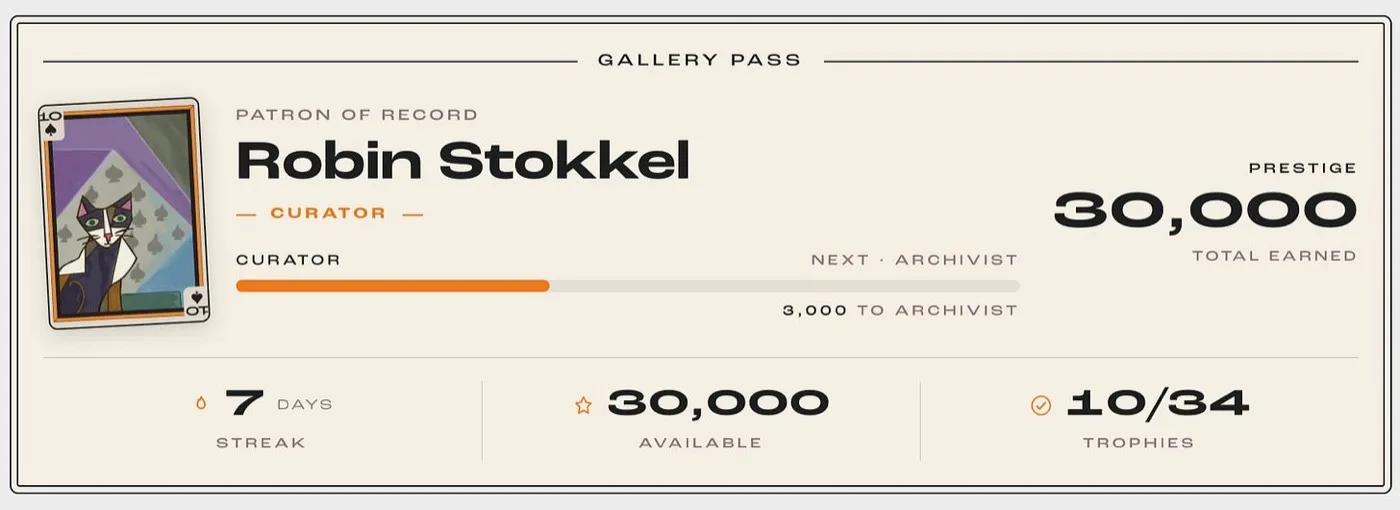
Keep an eye on the next newsletter for the details.
- Robin
Written by Robin Stokkel for Four Suit Studio.